
Catholic sisters in Kenya are transforming underutilized land into productive farms to strengthen food security, support elderly religious sisters and empower vulnerable rural women through sustainable agriculture.
By Sr. Michelle Njeri, OSF
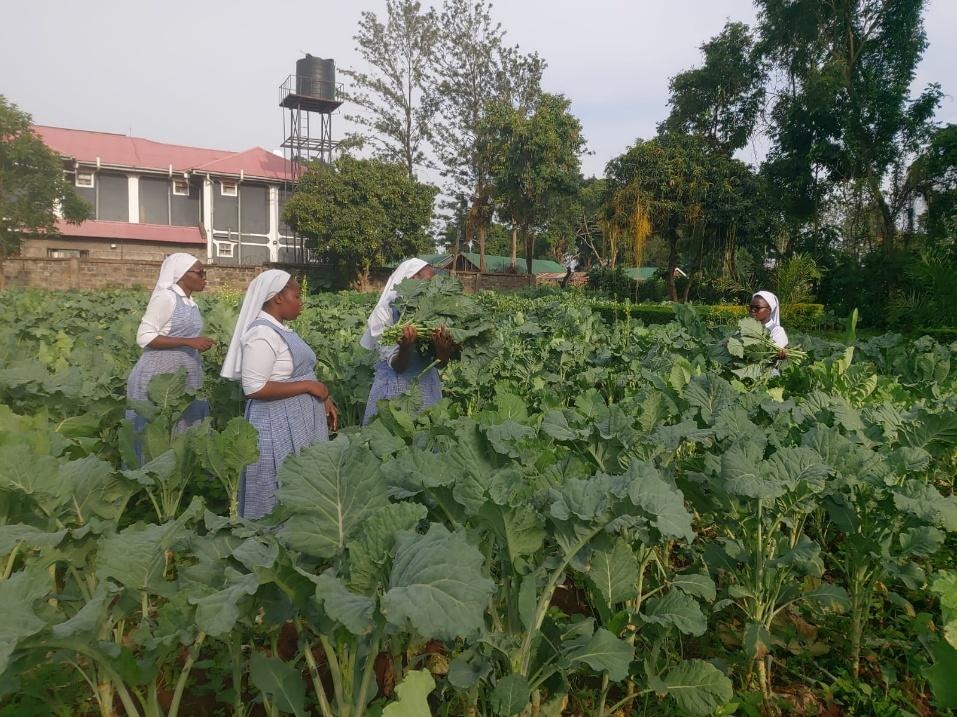
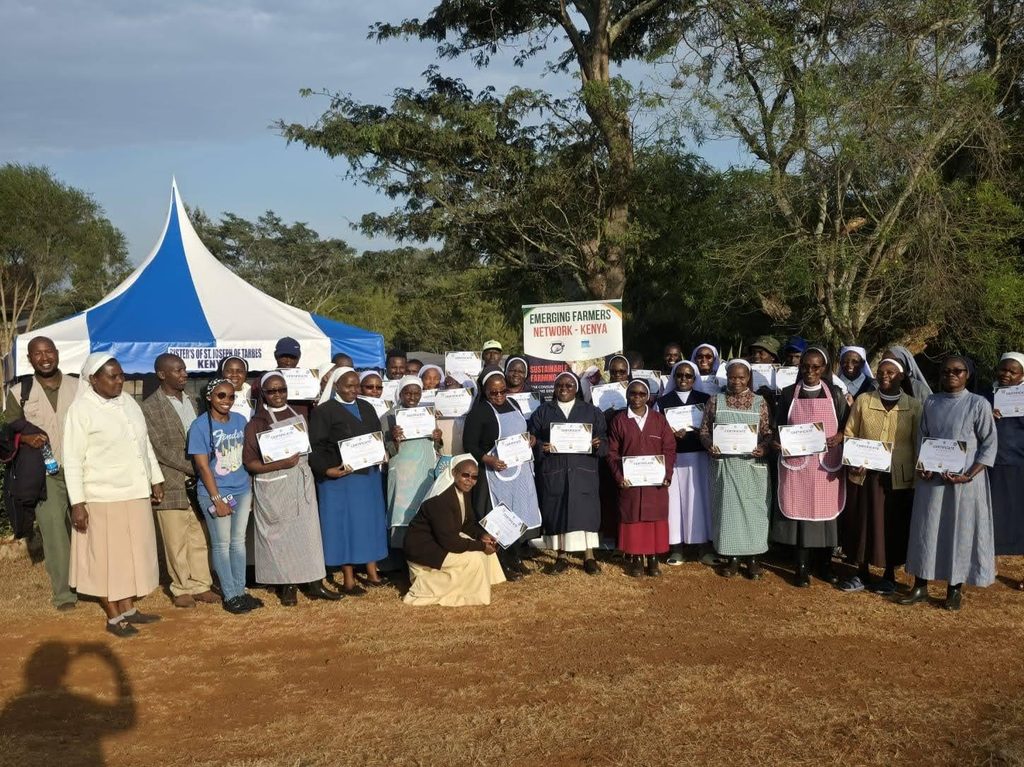
The Emerging Farmers Initiative, led by the Sisters of St. Joseph of Tarbes, brings together 12 religious congregations and formation houses to promote sustainable farming, generate income and encourage sisters to embrace agriculture as a form of ministry.
Sr. Josephine, the initiative’s coordinator, says the idea emerged during her master’s studies in Social Transformation, specializing in Sustainable Development, at Tangaza University in Nairobi. “During an academic paper on advocacy, I wrote about the development of our idle land for food security and environmental justice at our formation house in Nyeri,” she explains. Her professor encouraged her to submit the idea to the 2023 UN Journalists and Writers Foundation Pioneers Award, where it received the People’s Choice Award. “We were recognized as champions of regenerative agriculture in Kenya,” she shares.
Building communion through sustainable agriculture
For Sr. Josephine, the initiative reflects the charism of the Sisters of St. Joseph of Tarbes. “I can say it is the spirit of our charism of communion. We are called to live and build communion among ourselves and with others,” she says.
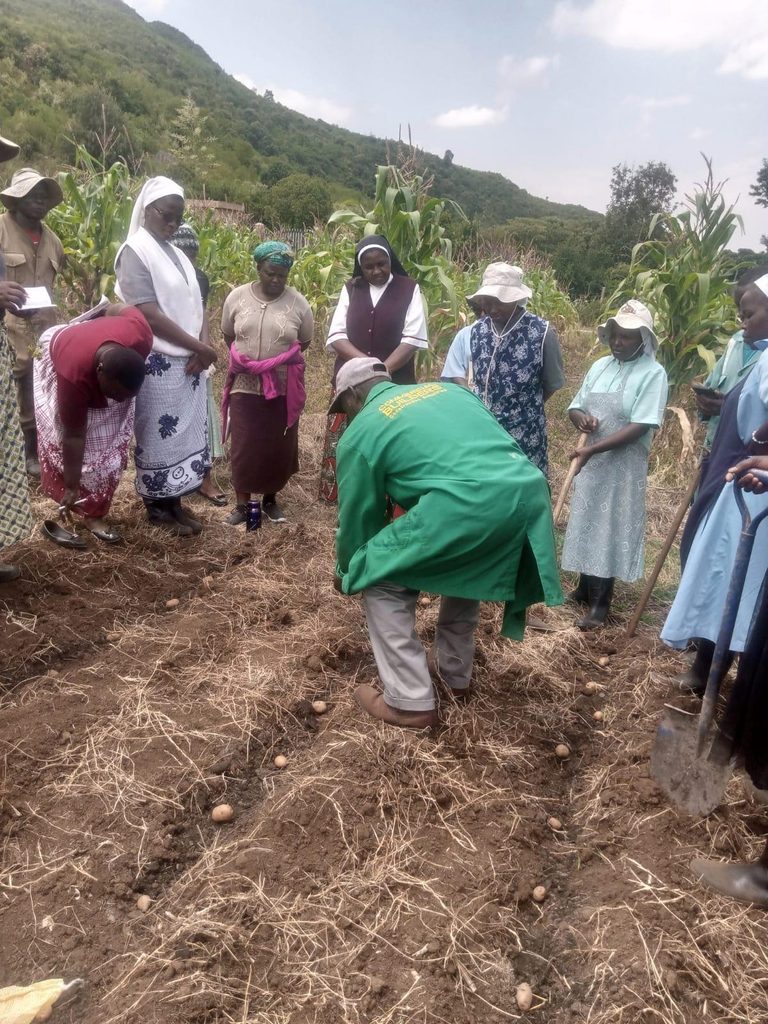
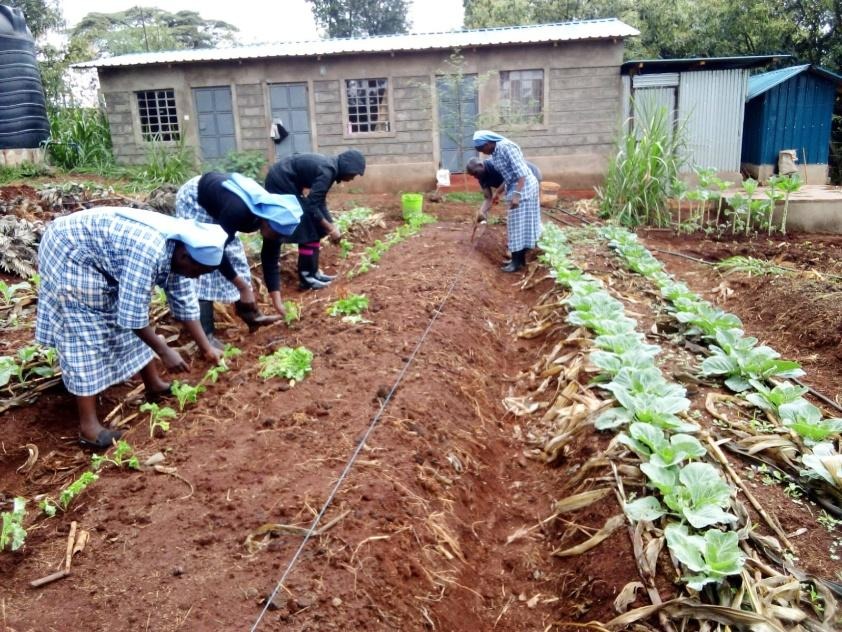
The project trains sisters in permaculture design through the Laikipia Permaculture Centre. Each participating congregation receives a sub-grant to apply the knowledge, while project staff provide mentorship and technical advice. Activities focus on sustainable farming and include vegetable gardens, fruit-tree cultivation, poultry and goat rearing, beekeeping and vermicomposting, Sr. Josephine shares.
The approach encourages integrated farming, where different elements support one another. “Manure from the cows goes to enrich the farm, and the fodder from the farm is food for the cows,” she explains. The congregations hope to produce enough food for their communities while selling surplus produce to generate income. Their farms could also become demonstration sites for neighbouring farmers.
Strengthening religious communities
The initiative also seeks to help congregations meet the needs of young sisters in formation and elderly and infirm members while reducing dependence on external funding. “Sustainable agriculture is about growing food without the application of synthetics, but instead using organic fertilizers, pesticides and indigenous seeds,” Sr. Josephine explains.
She hopes that nutritious food will improve the well-being of religious communities, while income from surplus produce will help cover daily expenses and healthcare. “Income from surplus farm produce is expected to help the congregations enhance their financial sustainability by reducing dependence on donors who are currently shrinking,” she says. Some participating congregations, including the Sisters of St. Joseph of Mombasa, the Sisters of the Incarnate Word, the Sisters of Nazareth and the Benedictine Sisters of Our Lady of Grace and Compassion, have already begun harvesting vegetables.
Empowering rural women
The initiative also aims to reach 180 rural women, particularly widows and single mothers, through agricultural training and support for income-generating activities. In Nyeri, the Sisters of St. Joseph of Tarbes identified women through their home-visitation apostolate and invited them to form a support group that has since become a self-help group. “We found women whose situation was difficult and invited them to come together to form a support group,” Sr. Josephine says.
The women face challenges including limited start-up capital, expensive farming inputs and tools, and unreliable markets. Training will cover composting, water conservation, crop diversification, agroforestry, farm planning and financial management.
Sr. Josephine shares the story of Jane Njeri, a single mother who struggled to feed her three children and elderly mother. “At times, she had to hire a machete for 50 shillings to go and work for 300 shillings a day. After paying for the machete, the balance was the supper for the entire family,” she recounts. Today, Jane has a multistorey vegetable garden that provides food for her household as well as for sale enabling her cater the bills.
Farming as a ministry
The initiative also seeks to change how young sisters perceive agriculture, helping them recognize its potential to serve both their congregations and surrounding communities. “It is my hope and expectation that the sisters will change their attitude from perceiving farming as a dirty, tiring job to a new form of ministry that contributes positively to better lives, relationships and the economy,” Sr. Josephine says. She notes that many congregations in Kenya have underutilized land that could support food production, create employment and strengthen rural livelihoods.
Sustaining the mission
Limited resources, changing climate patterns, inadequate skills and difficulties accessing markets remain challenges. Sr. Josephine says continued training, strategic partnerships, climate-resilient farming and reinvestment of profits would help sustain the initiative beyond its funding period.
Her hope is to see sisters embrace farming with joy, formation houses become more financially sustainable, and rural women gain greater economic independence. “By embracing sustainable agriculture, learning together and partnering with experts, congregations can transform their idle land into productive assets that generate income, create opportunities for rural communities, support young and aging sisters, and care for our common home,” she affirms.