


Why recognizing and healing personal wounds is essential for spiritual growth, community resilience, and authentic vocation
Religious life has always been seen as a sacred response to God’s call—marked by commitment, sacrifice, and the pursuit of holiness. Yet beneath this noble vocation lies a deeply human reality: those who enter religious life bring with them their own histories, including wounds, losses, and unresolved trauma. Trauma is rarely visible, but its effects ripple through spiritual development, community living, leadership dynamics, and vocational perseverance. It can distort one’s image of God, disrupt relationships, and even contribute to burnout among religious leaders.
Religious life is often perceived as a sanctuary for those seeking a deeper connection with God. But vocation does not erase human woundedness. Individuals enter religious life not as blank slates but as persons shaped by complex experiences. Trauma, as contemporary research shows, can significantly hinder both personal growth and communal harmony. Despite this reality, many religious communities lack the frameworks and language to address trauma effectively.
Trauma can take many forms. Developmental trauma stems from adverse childhood experiences such as neglect or abuse. Relational trauma comes from broken trust or betrayal. Secondary traumatic stress affects those who minister to suffering communities. Religious or spiritual trauma can emerge from harmful practices, fear-based teachings, or rigid doctrines. Each form leaves a mark, and ignoring them has consequences.
The prevalence of trauma among clergy and religious leaders is high. Emotional labor, role ambiguity, and heavy expectations all make individuals vulnerable. Many suppress their struggles because emotional difficulties are often interpreted as spiritual weakness. Silence becomes a burden, and suffering is compounded. Breaking this silence is the first step toward real healing.
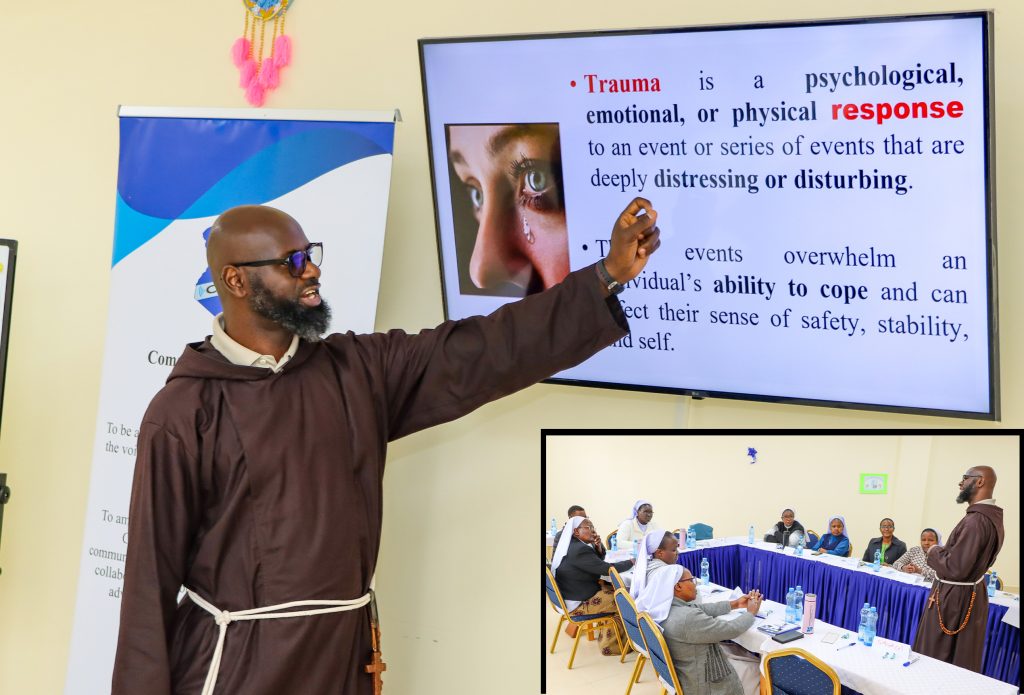
Trauma profoundly shapes one’s perception of God. Harsh or inconsistent caregiving, for instance, can create a fear-driven or judgmental image of the divine. Emotional wounds may make prayer, reflection, or participation in community life anxiety-inducing. Healing trauma is therefore not just psychological—it is spiritual. It allows religious men and women to approach God with trust rather than fear.
Trauma also affects community life. Unresolved wounds manifest as conflict, withdrawal, or emotional dependency. These behaviors are often misunderstood as moral failings rather than signs of pain. A trauma-informed perspective shifts the question from “What is wrong with this person?” to “What has this person experienced?” Communities that embrace this approach foster empathy, understanding, and growth.
Formation programs in religious life must integrate psychological awareness with spiritual training. Self-reflection, emotional regulation, and access to counseling are essential. Safe spaces for sharing personal experiences should be encouraged. Leaders, too, must be trauma-informed—listening, accompanying, and guiding with compassion. When leaders understand trauma, they create environments of trust and resilience.
Religious trauma—harm caused by faith-based practices—requires particular care. Individuals may struggle to pray, participate in sacraments, or connect with God because of past harm. Addressing religious trauma involves disentangling spiritual experience from the damaging practices or authority figures that caused it, creating space for authentic faith to flourish.
Yet trauma is not only a challenge—it can be transformative. Post-traumatic growth shows that with support and intentional effort, individuals can develop resilience, stronger relationships, and a renewed sense of purpose. Religious men and women who face their own trauma often become better equipped to minister compassionately to others.
Practically, this means integrating trauma awareness at all levels. Institutions should offer education and support structures. Communities should foster dialogue, openness, and empathy. Individuals must embrace self-awareness and seek professional help when necessary. Healing is central to the mission of Christ, who came to restore wholeness-physically, emotionally, and spiritually.
Religious life, as a continuation of Christ’s mission, must embrace healing as an essential part of vocation. Authentic ministry flows not from perfection but from wholeness, from men and women who have faced their wounds and grown. When trauma is acknowledged and addressed, it becomes a source of strength rather than a barrier. A Church that seeks to heal the world must first be a place of healing for its own members. Only then can religious men and women fully embody the love and compassion they are called to proclaim.