
Providing practical skills, education, and support for livelihoods among Kakuma’s diverse youth communities.
At St. Clare of Assisi Training Institute, young people from pastoralist and refugee backgrounds gain practical skills, education, and a pathway to self-reliance in one of Kenya’s most challenging regions.
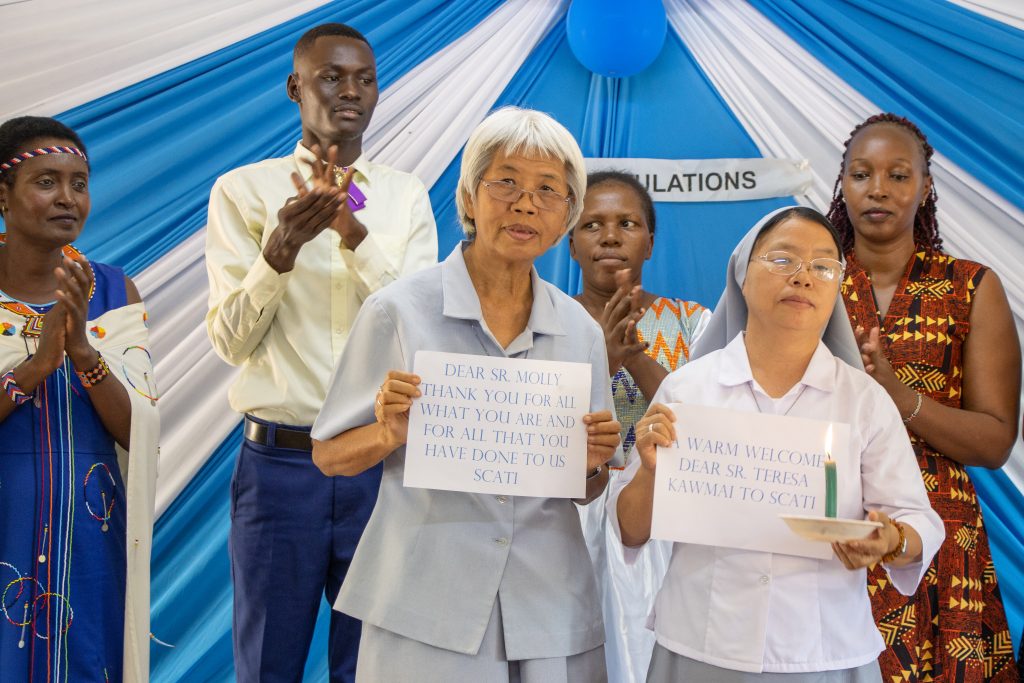
When Sr. Molly Lim arrived in Kakuma in 2014, it was supposed to be a temporary assignment-two years helping her fellow Franciscan Sisters of Mary on home leave. Eleven years later, Kakuma has become her mission, her community, and a place where hope is carefully cultivated, one skill at a time.
The Franciscan Sisters of Mary first came to Ka kuma in 2001 at the invitation of the local bishop, tasked with running the St. Clare of Assisi Training Institute, originally known as the Home Craft Center. The institute was designed to help pastoralist communities adapt to town life, offering them the basic skills needed for independent living. Many of the students are Turkanas from interior villages, while others are refugees from neighboring countries. For these young people, moving to Kakuma is a major transition: leaving behind temporary homesteads and herding routines for structured education and communal living.
The institute provides two-year multi-skill courses, ranging from housekeeping and child care to basic agriculture and business entrepreneurship. English and Swahili language instruction are also integral, ensuring that students can communicate and pursue opportunities beyond Kakuma. “Most of them have never been to school. Teaching them English helps them navigate life in town and later, their own careers,” Sister Molly explains.
Students live and learn together in a fully participatory environment. There are no hired cooks or clean ers-students rotate through tasks, from preparing meals to maintaining the compound. This structure, according to Sister Mo Ling, is more than discipline; it teaches cooperation, responsibility, and community cohesion. “Cohesion among students is not easy. Turkanas have a relaxed lifestyle as pastoralists, while refugees bring different cultural and social experiences. By the end of the year, they learn to accept one another,” she says.
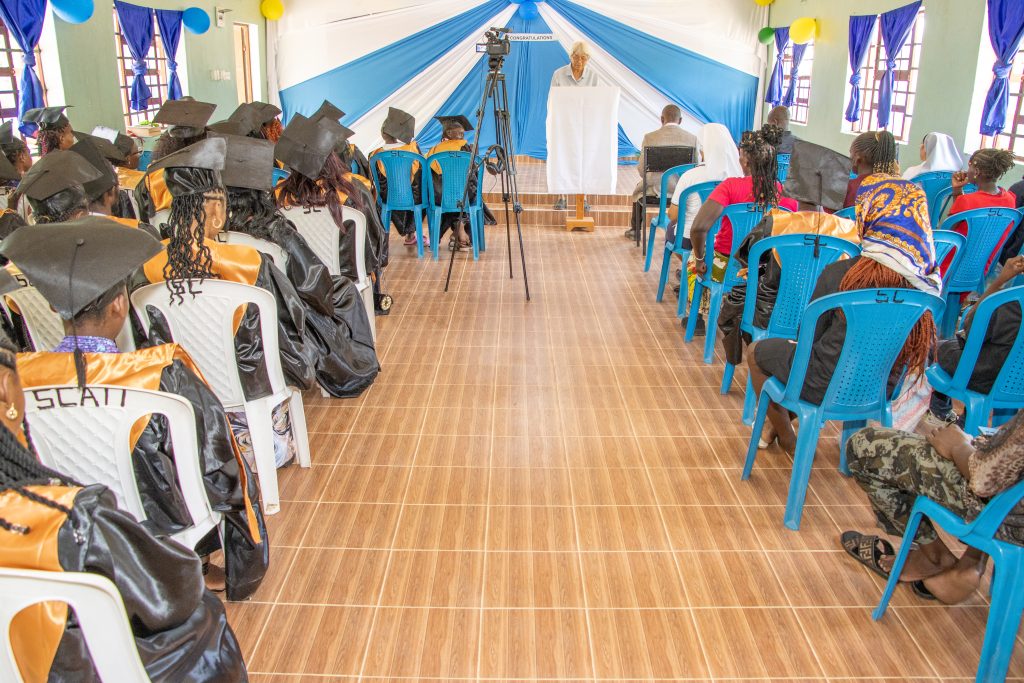
St. Clare’s impact extends far beyond the classroom. Alumni have gone on to become teachers within the institute or launched their own businesses, applying the skills they acquired to earn a living and contribute to their communities. However, access remains a challenge: school fees are required, though some students are sponsored by mission stations or local donors.
Sister Molly emphasizes that the institute is not just about education; it is about nurturing resilience, self-reliance, and social responsibility. The sisters also engage with the broader Kakuma community, addressing essential needs such as access to clean water and sanitation. “We have dug more than 200 pit latrines and supported borehole construction. The people here are welcoming and appreciative; when “Most of them have never been to school. Teaching them English helps them navigate life in town and later, their own careers.” “The people here are welcoming and appreciative; when we distribute relief, they share with those who cannot come.” we distribute relief, they share with those who cannot come,” she recalls.
Reflecting on her years in Kakuma, Sister Mo Ling says the experience has been as enriching for her as it has been for her students. “Interacting with these communities helps me appreciate my own country, myself, and others even more. My time here has been heartwarming and deeply engaging.”
Despite the challenges-limited resources, maintaining facilities, paying teachers, and ensuring updated training materials-the institute continues to prioritize students’ needs. Scholarships, subsidized fees, and community support help bridge gaps, ensuring that education remains accessible.
Through its work, St. Clare of Assisi Training Institute embodies the principles of empowerment and resilience, equipping young people with skills, confidence, and a sense of community that will carry them far beyond the boundaries of Kakuma.