
KIGALI, Rwanda.
For Sr. Mary Lucy Okwuowulu, sacred art is more than an image hanging on a church wall. It can tell people whether their faith recognises them, their culture and their lived experience.
The Nigerian Daughter of Mary, Mother of Mercy, shared her journey of exploring Marian art as a tool of inculturation and evangelisation during the SIGNIS World Congress in Kigali.
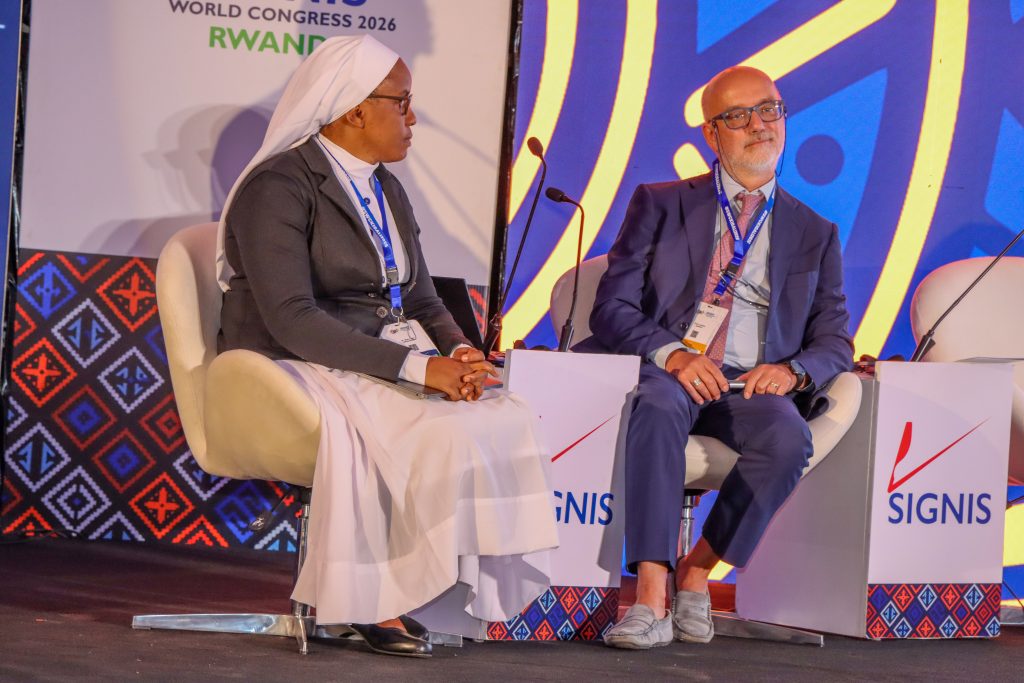
Her journey began with a question about the images of Mary she encountered in Nigerian churches. Many appeared European in appearance and style, leaving her wondering whether African Catholics could fully identify with an image of Mary who did not appear to share their cultural world.
“Faith can still be spotted, not incarnated,” she said, describing the cultural disconnect that can occur when sacred images do not reflect the people who encounter them.
Her response was not to reject Catholic tradition, but to explore how the universal message of the Church could be expressed through local culture. Through research involving bishops, priests and people from different Nigerian ethnic communities, she explored the relationship between sacred art, identity and belonging.
Her work eventually led her to create a Marian image in Nigerian cultural attire, titled “Our Lady of Nigeria.” The artwork seeks to present Mary in a way that resonates with the cultural identity and lived experience of Nigerian Catholics.
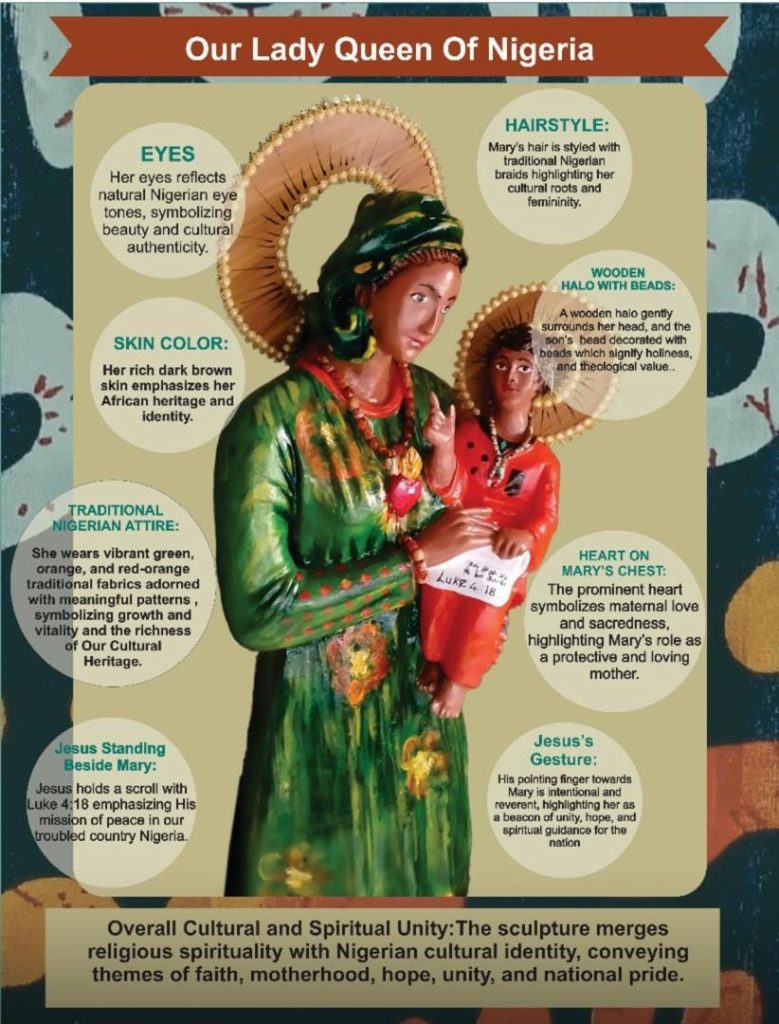
For Okwuowulu, the lesson is broader than the depiction of Mary. Art can become a language through which people encounter faith in a way that feels close to their own lives.
In an increasingly visual culture, she argues, the question for the Church is not simply what it communicates, but also whether people can recognise themselves in the images through which that message is presented.